Feria de los Países – photographing the parade in Fuengirola
Over 1,500 participants, 35 and 85 mm primes, a hip belt with lens changers – a report from the Pasacalles in Fuengirola, 1 May 2026.
More than 1,500 people in colourful costumes, a dense crowd of participants and spectators, full southern sun, and a pile of gear I do not use every day. That was my attempt at photographing a mass event with prime lenses and a hip belt with lens changers. When I packed for Spain, knowing I had to fit everything in carry-on luggage, it was clear that photography on this trip would be an exercise in compromise.
The action took place in Fuengirola on the Costa del Sol – specifically the Feria Internacional de los Países (FIP), known locally simply as Feria de los Pueblos. This is not an ordinary food festival. This year’s edition featured 33 national representations from around the world, showcasing their culture, cuisine, and dance in dedicated pavilions (casetas). The event draws a million visitors every year.
I visited the fairground several times, but what interested me most photographically happened on 1 May. On that day, the Spanish Labour Day public holiday, the Pasacalles takes place – the grand parade that opens the festival. Tens of thousands of spectators, a blocked city centre, and in the middle of it all a river of dancing, playing, and singing people.
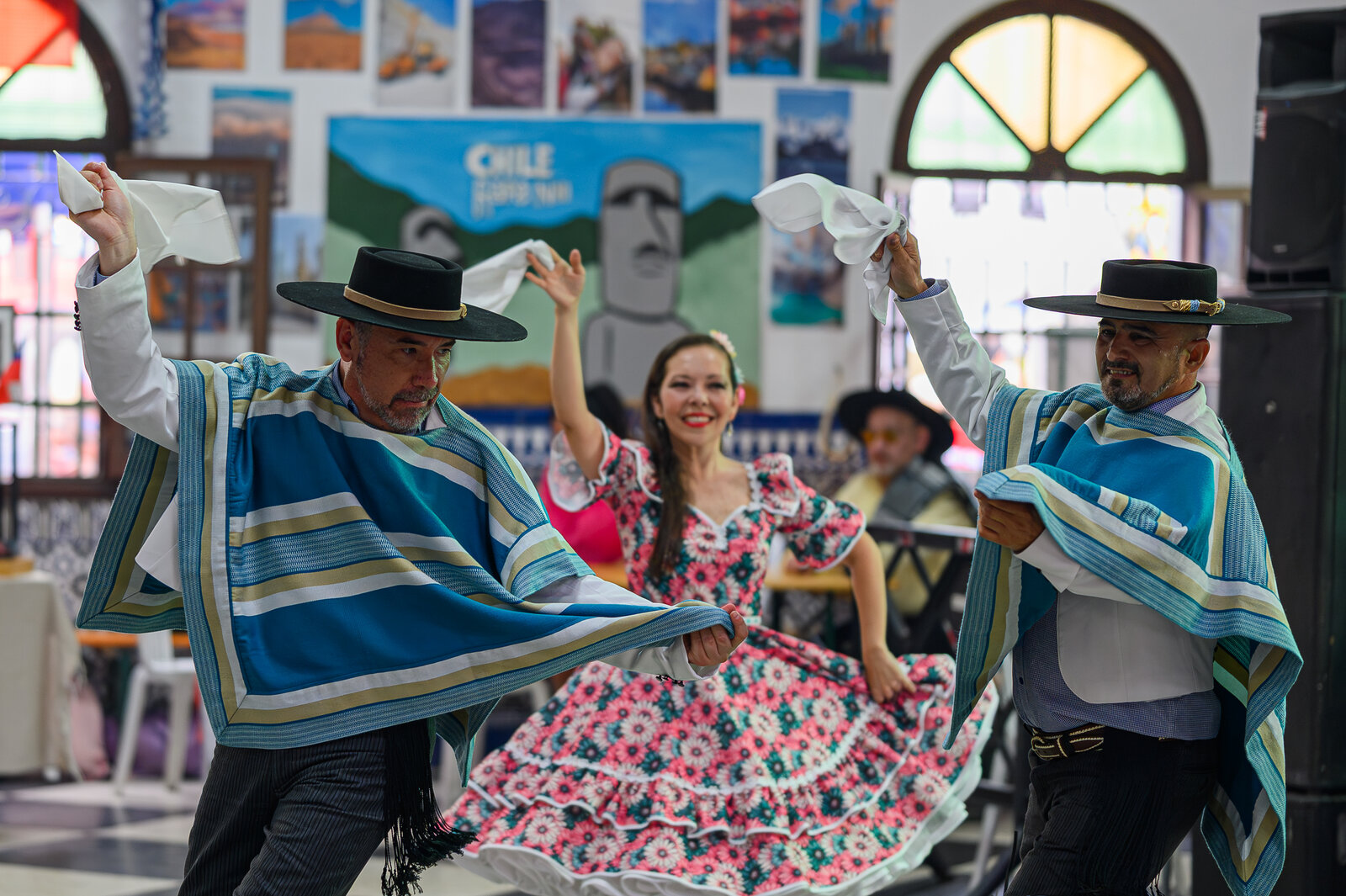 Chile – dancers performing Nikon Z6 II, 85 mm f/1.8, 1/800 s
 Chile – dancers performing
Nikon Z6 II, 85 mm f/1.8, 1/800 s
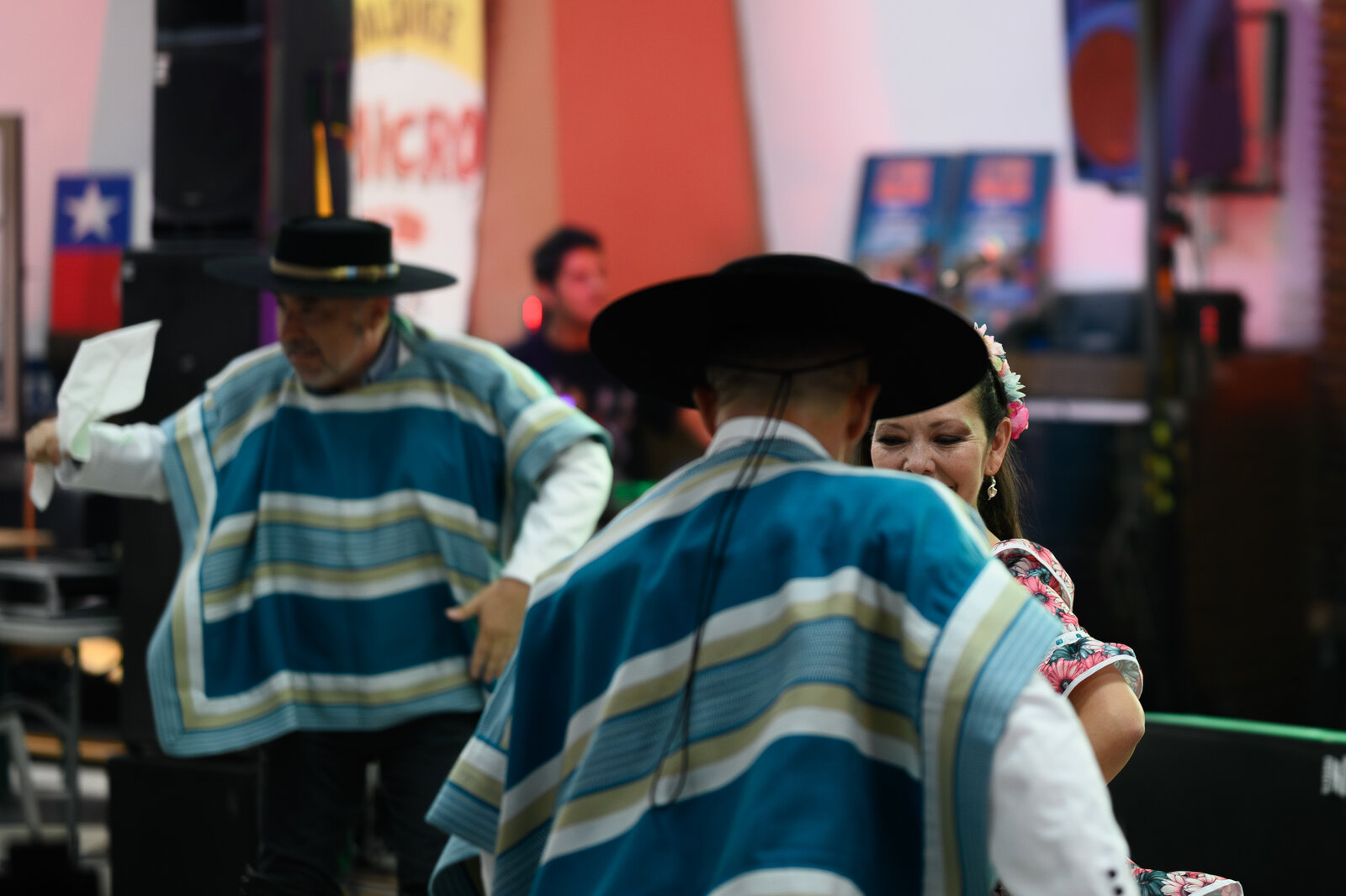 Chile – dancers performing Nikon Z6 II, 85 mm f/1.8, 1/800 s
 Chile – dancers performing
Nikon Z6 II, 85 mm f/1.8, 1/800 s
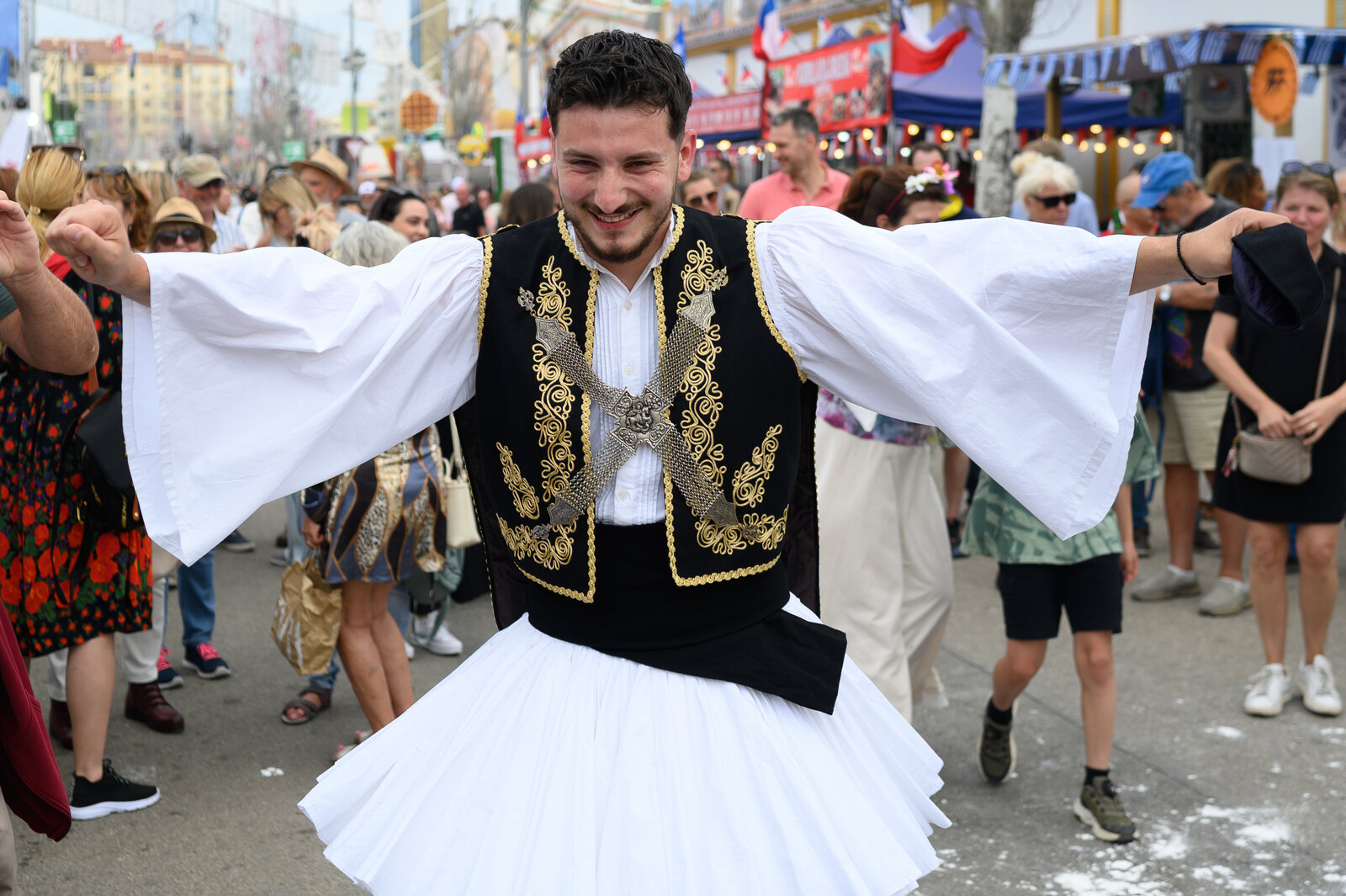 Street performance at the Greek caseta Nikon Z6 II, 35 mm f/3.2, 1/800 s
 Street performance at the Greek caseta
Nikon Z6 II, 35 mm f/3.2, 1/800 s
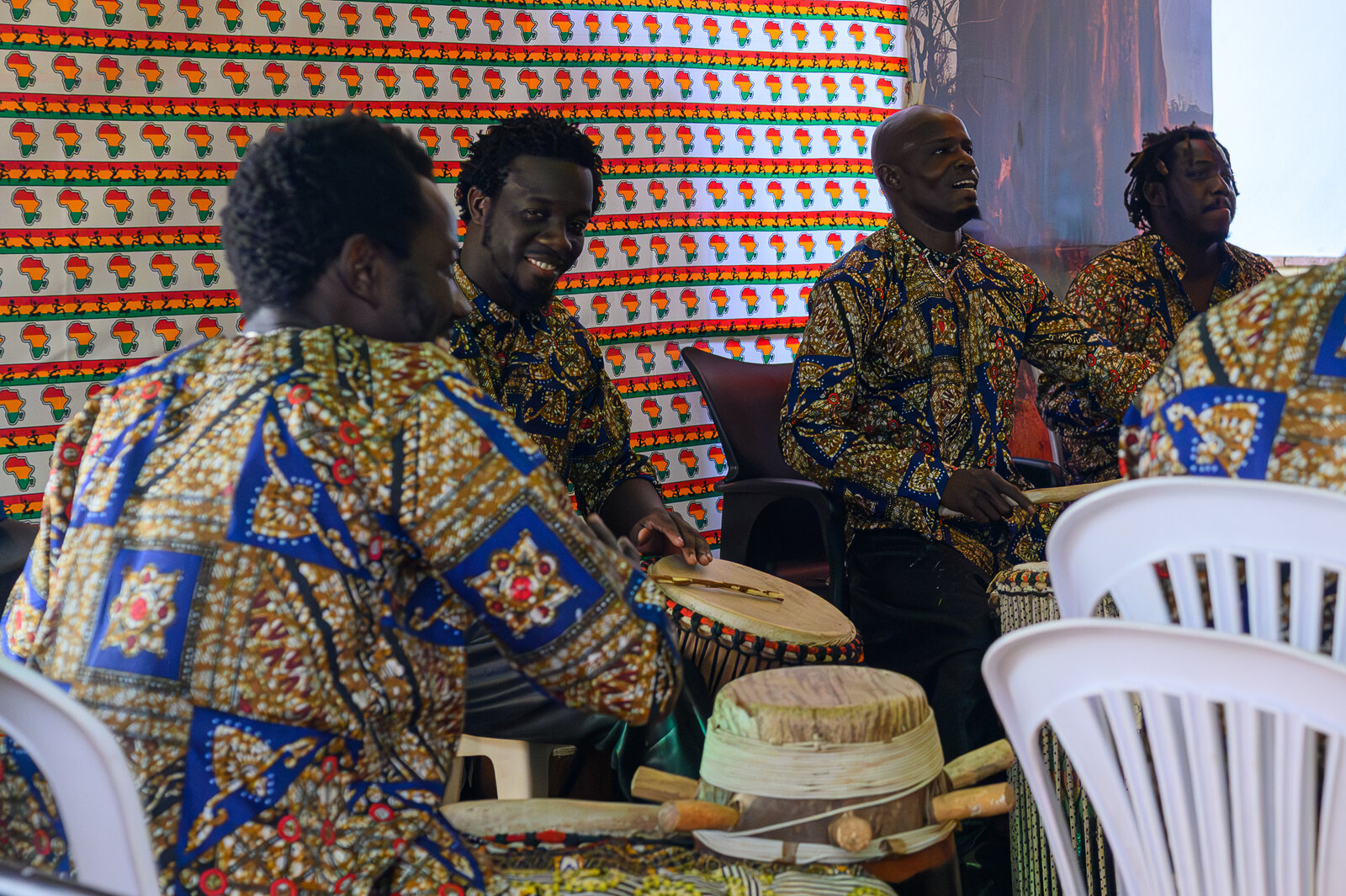 Ghana caseta – drummers performing Nikon Z6 II, 35 mm f/4, 1/200 s
 Ghana caseta – drummers performing
Nikon Z6 II, 35 mm f/4, 1/200 s
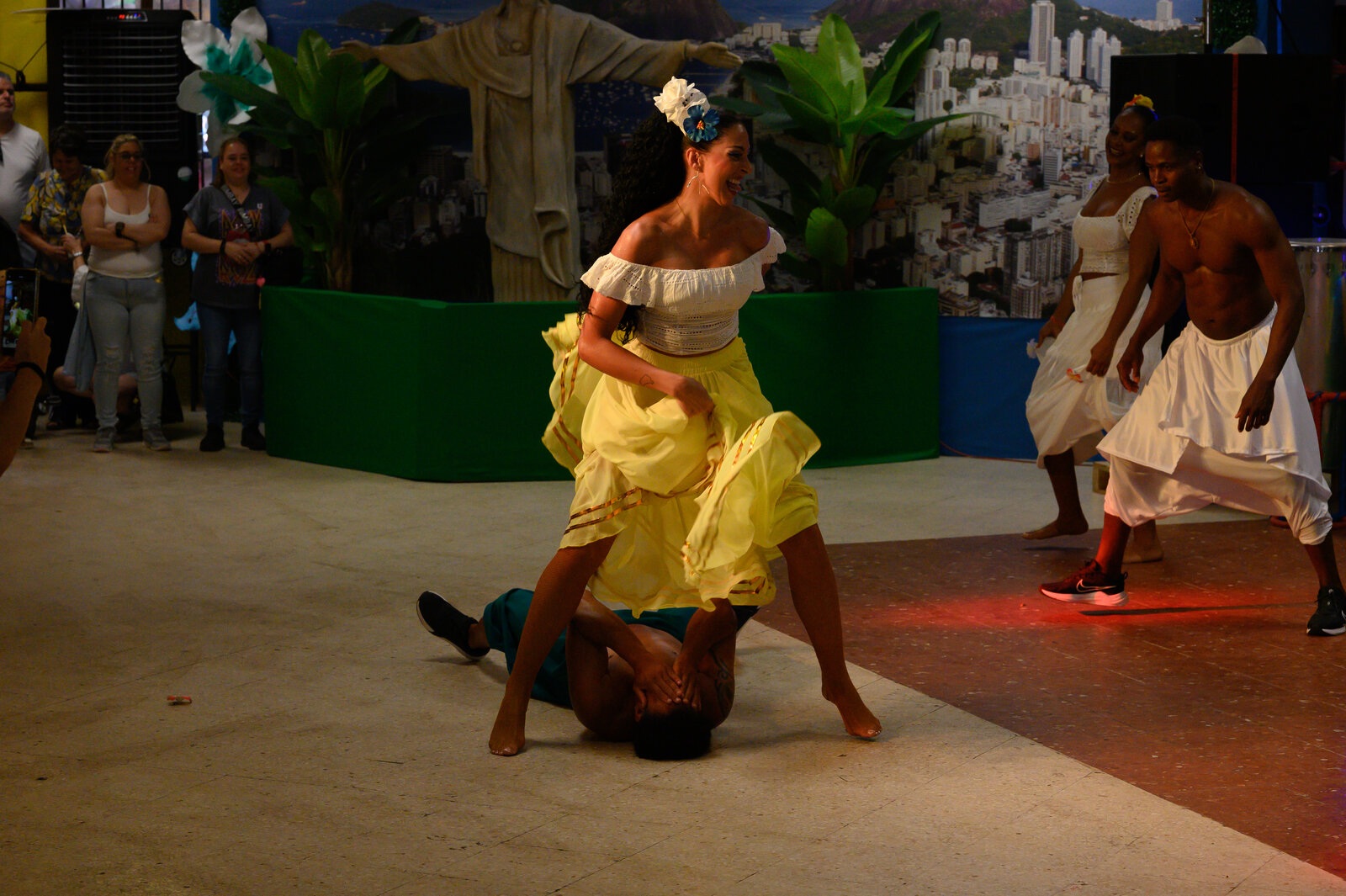 Brazil – dance performances with acrobatic poses and capoeira Nikon Z6 II, 35 mm f/7.1, 1/640 s
 Brazil – dance performances with acrobatic poses and capoeira
Nikon Z6 II, 35 mm f/7.1, 1/640 s
Deliberate gear constraints
I do not work as a professional photographer. Street photography is a hobby for me, but when an opportunity like this comes along, I cannot pass it up. Travelling light, however, has its limits and compromises were unavoidable.
I brought a Nikon Z6 II and only two lenses: the Nikkor 35 mm f/1.8 and the Nikkor 85 mm f/1.8. I left the wide angle at home and took nothing longer, even though I have been using a telephoto a lot lately. I skipped zooms, which in theory offer more flexibility (day to day I use technically excellent glass, but none of it is faster than f/4). I did not even pack ND filters. Instead of a camera bag or photo backpack, I experimented with a Think Tank Pro Speed Belt v3.0 and Lens Changer 25 v3.0 pouches.
Why tighten my options this much? I wanted to focus on finding emotion, interaction, and colour – rather than wasting time choosing the perfect focal length or fighting a heavy backpack.
The starting square
The parade sets off from the town hall at Plaza de España. I arrived early alongside the Puerto Rico delegation. Nothing has officially started yet. Last-minute choreography rehearsals, costume adjustments, trucks, platforms, cars, and floats being prepared. The square buzzes with energy.
For a photographer, this is a goldmine of backstage frames. People are not yet fully absorbed in the march, which makes it easier to get close and catch details.
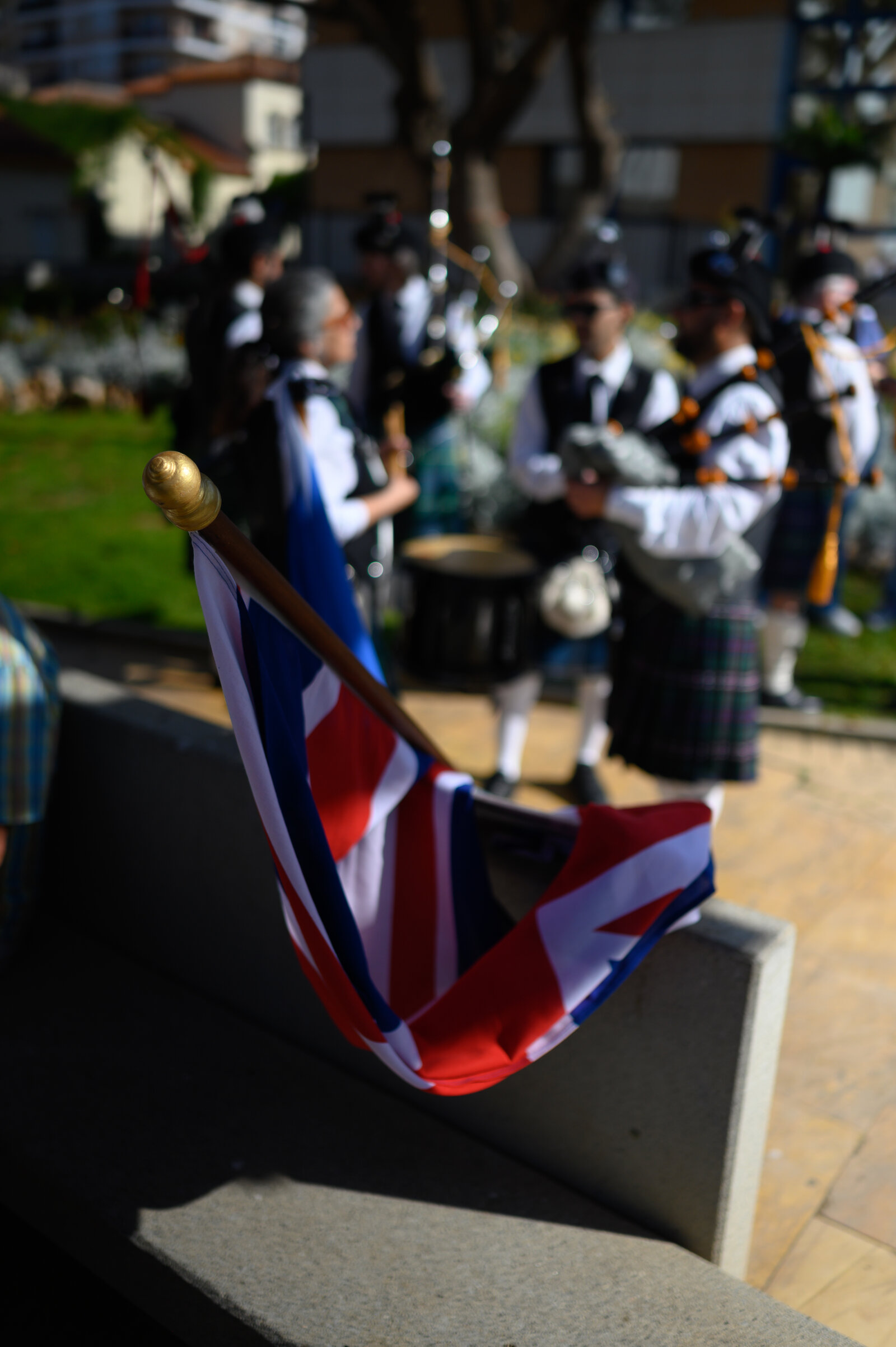 Union Jack flag, artists preparing for the parade in the background Nikon Z6 II, 35 mm f/7.1, 1/8000 s. With this much contrast, and not wanting to blow out the background, the only workable shutter speeds were 1/4000 or 1/8000 at ISO 100.
 Union Jack flag, artists preparing for the parade in the background
Nikon Z6 II, 35 mm f/7.1, 1/8000 s. With this much contrast, and not wanting to blow out the background, the only workable shutter speeds were 1/4000 or 1/8000 at ISO 100.
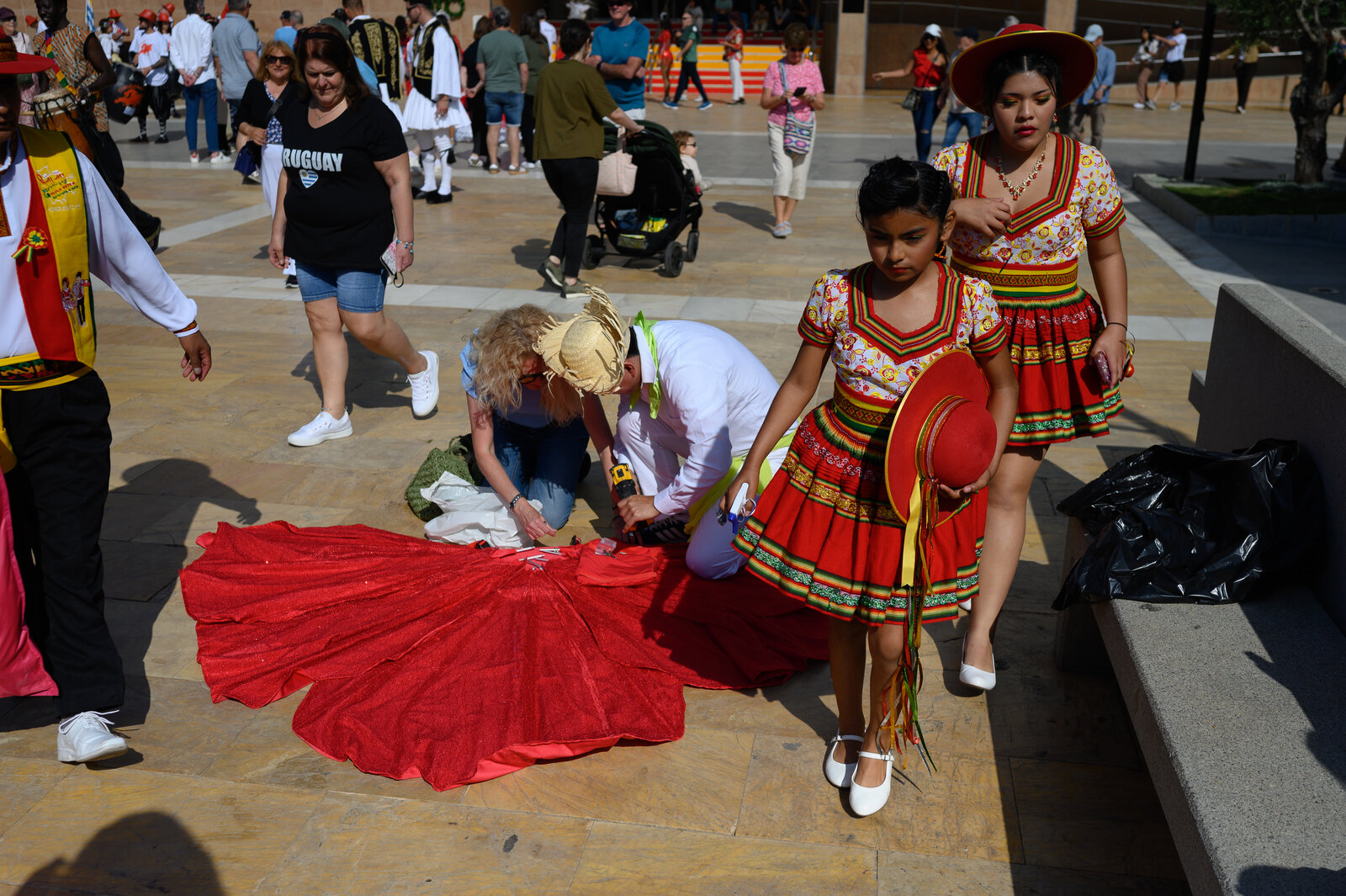 Puerto Rico building a large fan for a dancer Nikon Z6 II, 35 mm f/4.5, 1/3200 s
 Puerto Rico building a large fan for a dancer
Nikon Z6 II, 35 mm f/4.5, 1/3200 s
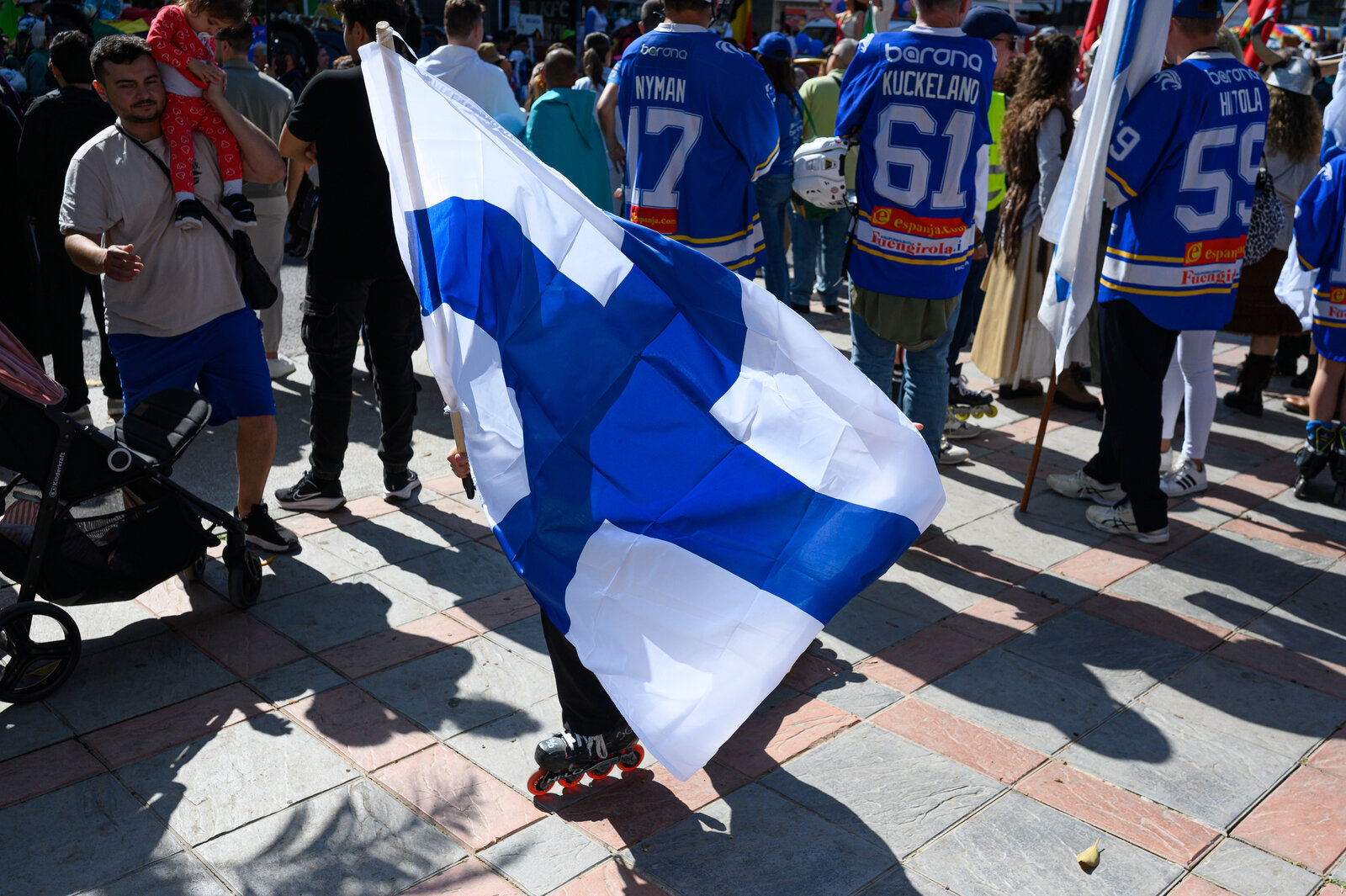 Finland Nikon Z6 II, 35 mm f/6.3, 1/4000 s
 Finland
Nikon Z6 II, 35 mm f/6.3, 1/4000 s
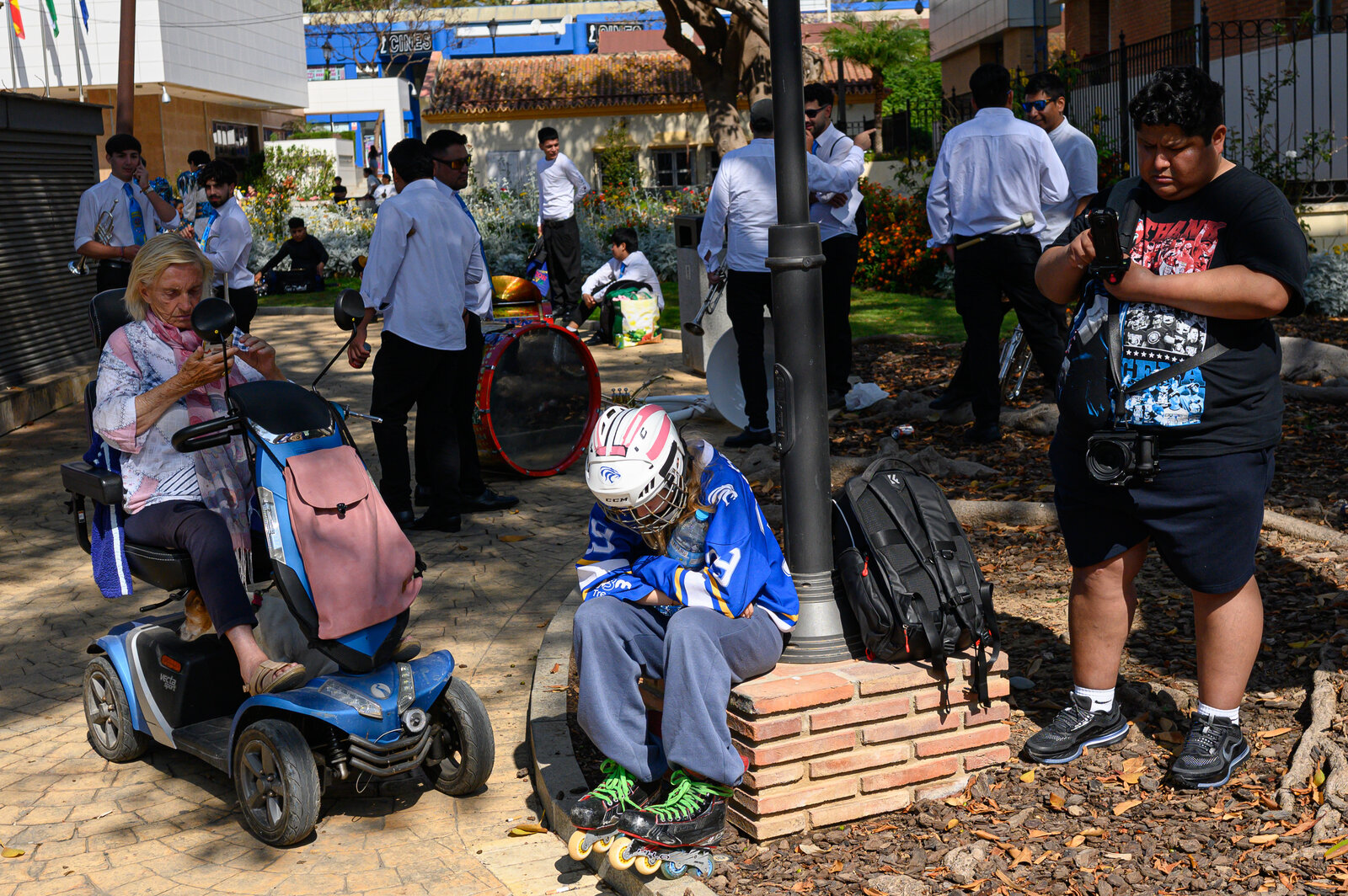 Participants waving from the shade Nikon Z6 II, 35 mm f/6.3, 1/4000 s
 Participants waving from the shade
Nikon Z6 II, 35 mm f/6.3, 1/4000 s
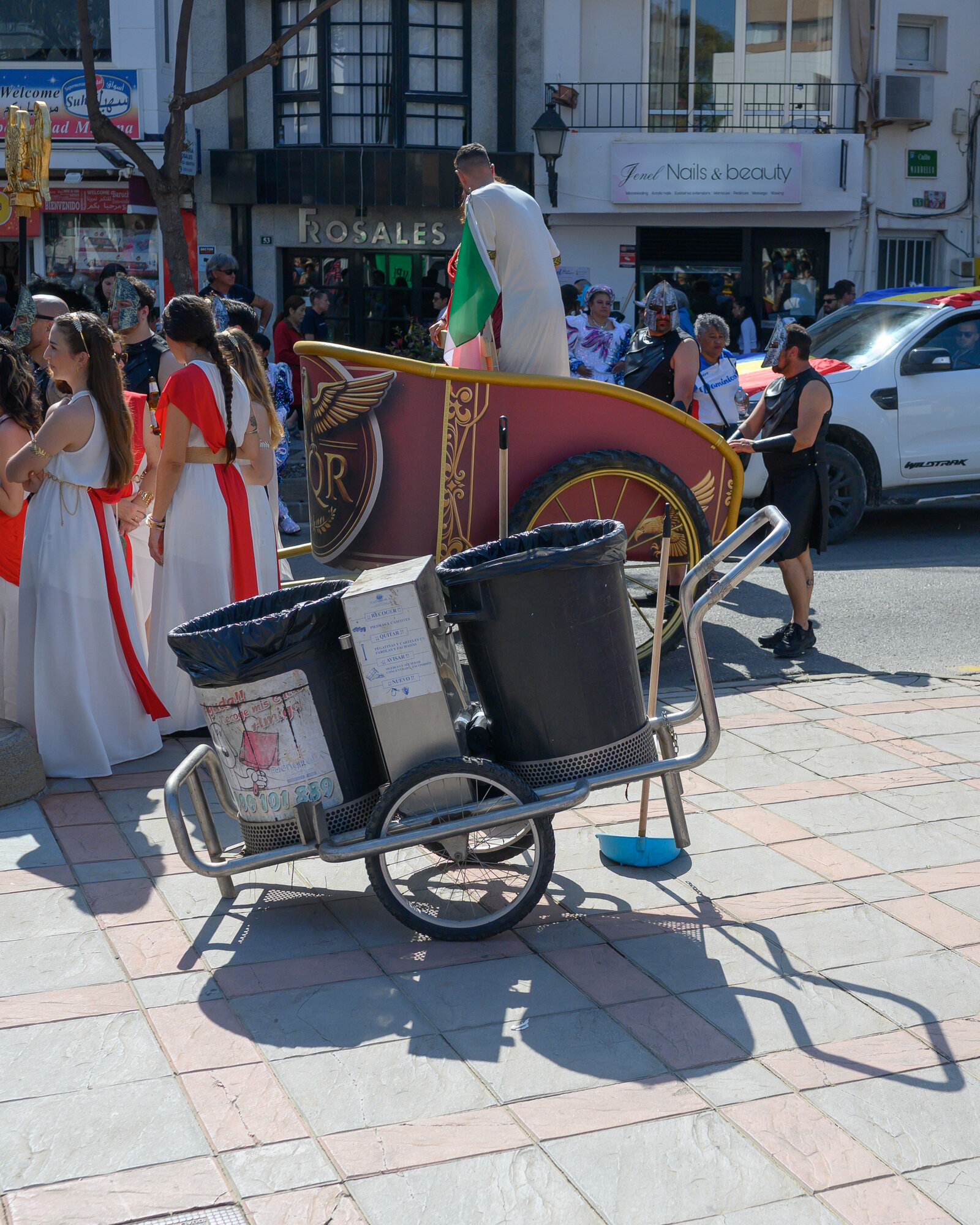 Horse-drawn carriages Nikon Z6 II, 35 mm f/5.0, 1/4000 s
 Horse-drawn carriages
Nikon Z6 II, 35 mm f/5.0, 1/4000 s
An interesting observation from the middle of the chaos: when you go out to photograph an event like this, forget about being an invisible observer. You are one of the few people without a national costume or flag. Participants spot a camera in the crowd instantly. On the other hand, nobody makes a fuss about it.
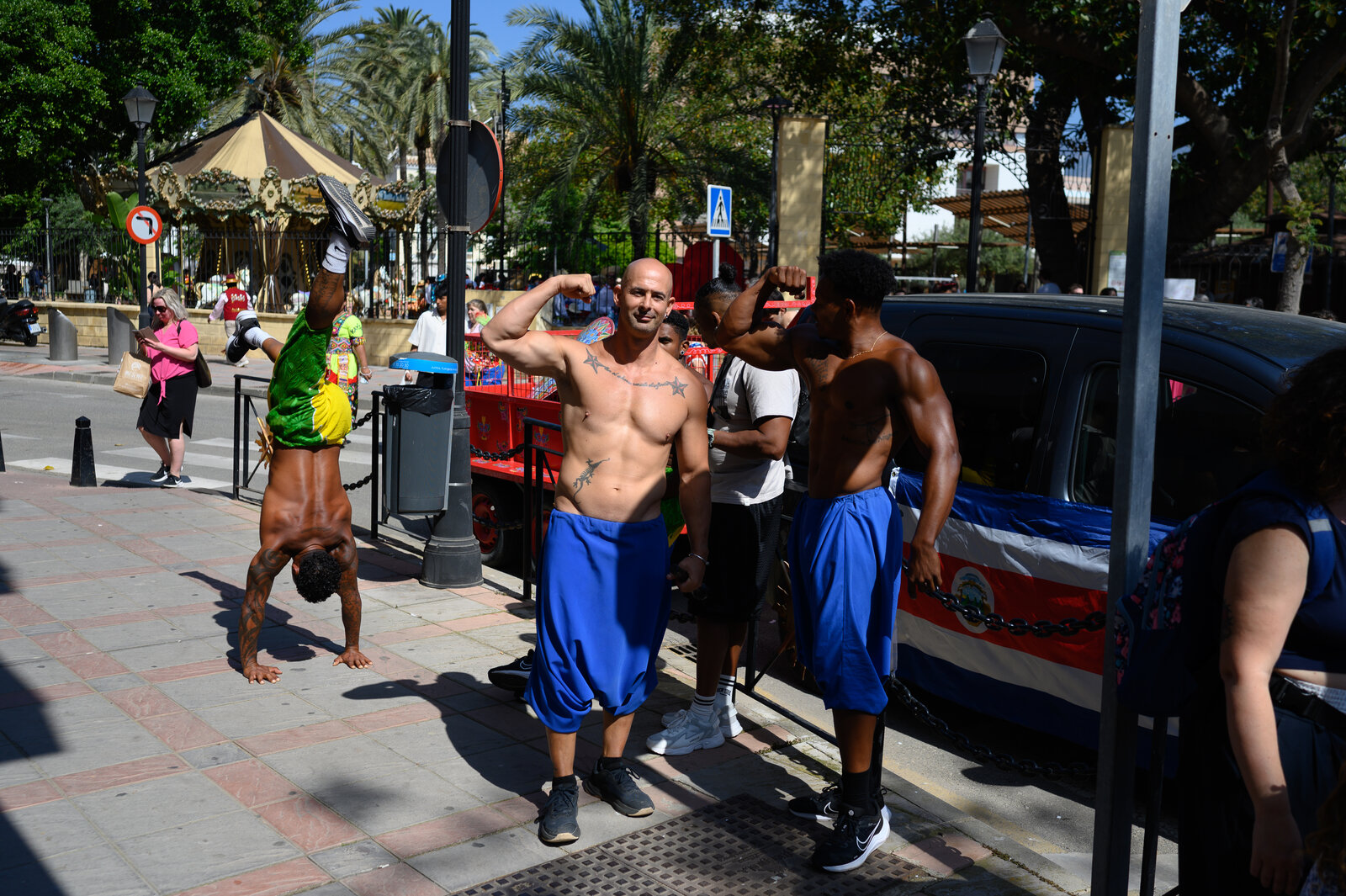 Brazilian acrobats warming up Nikon Z6 II, 35 mm f/4.0, 1/1600 s
 Brazilian acrobats warming up
Nikon Z6 II, 35 mm f/4.0, 1/1600 s
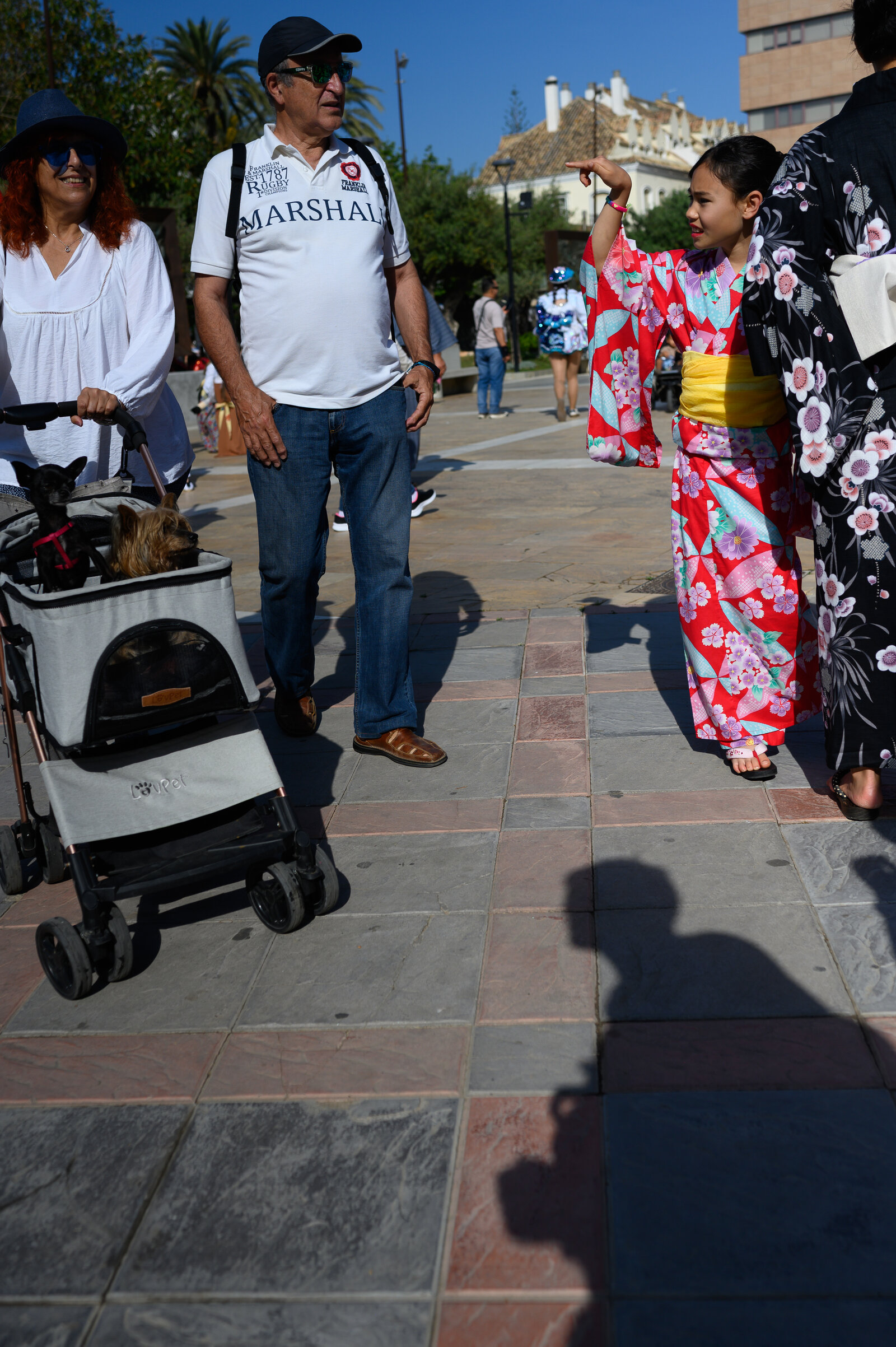 Sometimes you end up in your own frame Nikon Z6 II, 35 mm f/4.0, 1/5000 s
 Sometimes you end up in your own frame
Nikon Z6 II, 35 mm f/4.0, 1/5000 s
The route
Once the parade started, I began hopping every few hundred metres between groups. That is when the real fight began.
Thousands of spectators line the route. In places they stand four or five rows deep. Either you push to the front and fight for space, or you settle for photographing the backs of the people in front of you. When you finally squeeze into the front row, reality hits. The background can be terrible (signs, poles, passers-by), the Andalusian sun burns mercilessly creating deep, harsh shadows, and so much is happening around you that your brain stops cooperating.
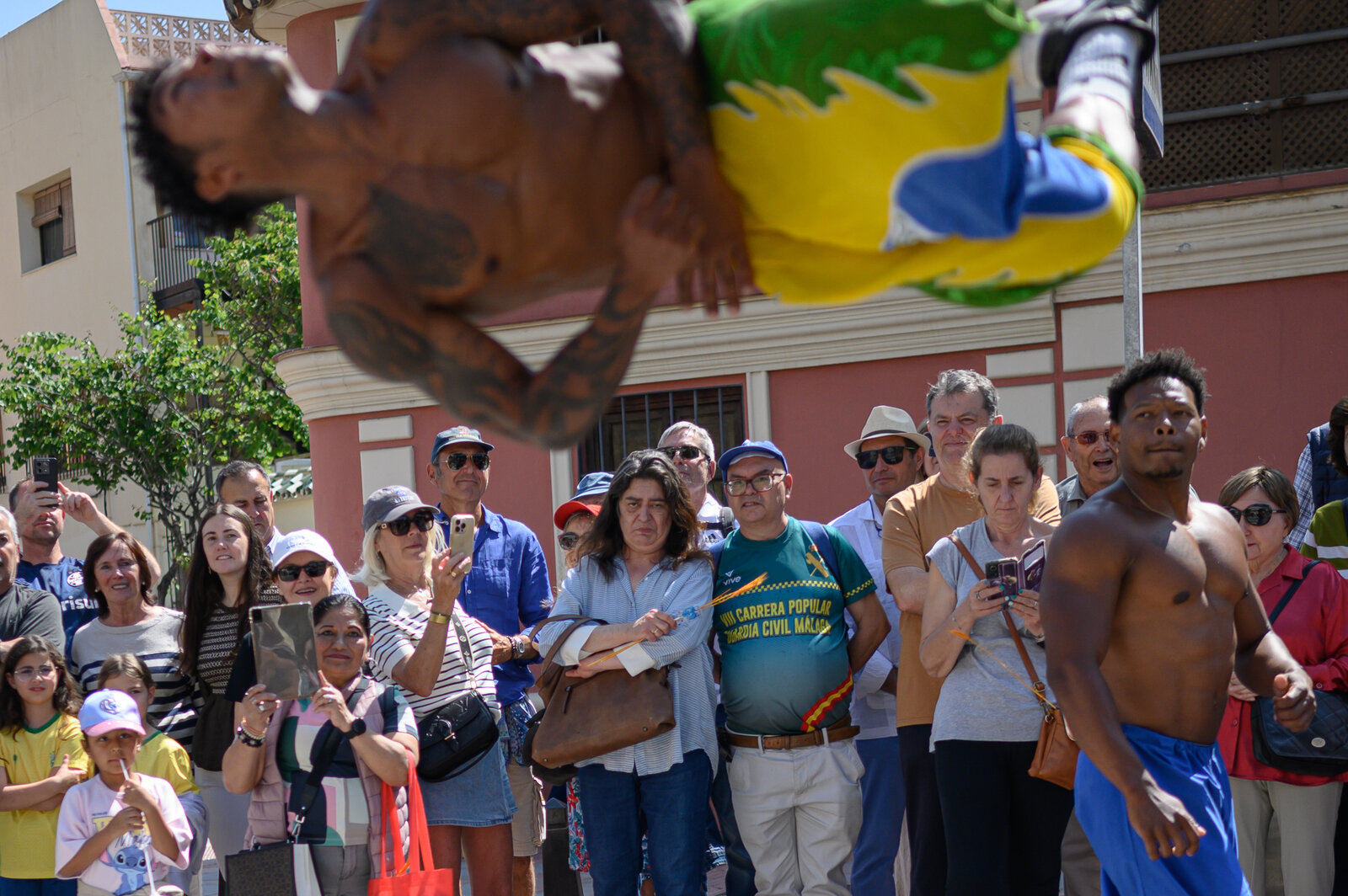 Brazilian acrobats Nikon Z6 II, 35 mm f/1.8, 1/8000 s
 Brazilian acrobats
Nikon Z6 II, 35 mm f/1.8, 1/8000 s
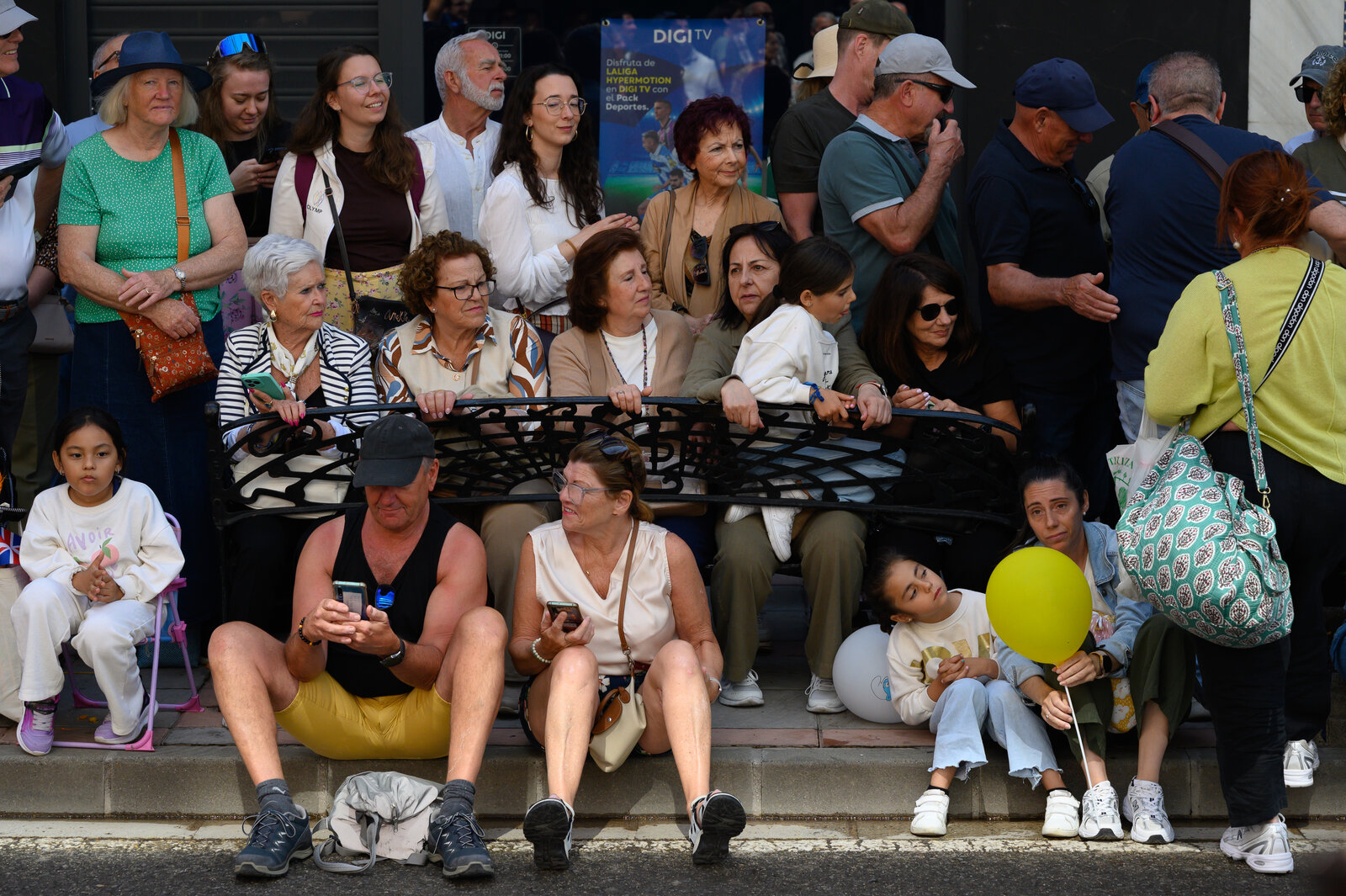 Spectators filling every bit of space Nikon Z6 II, 85 mm f/5.6, 1/2000 s. This is exactly the kind of frame where the 85 mm came in handy.
 Spectators filling every bit of space
Nikon Z6 II, 85 mm f/5.6, 1/2000 s. This is exactly the kind of frame where the 85 mm came in handy.
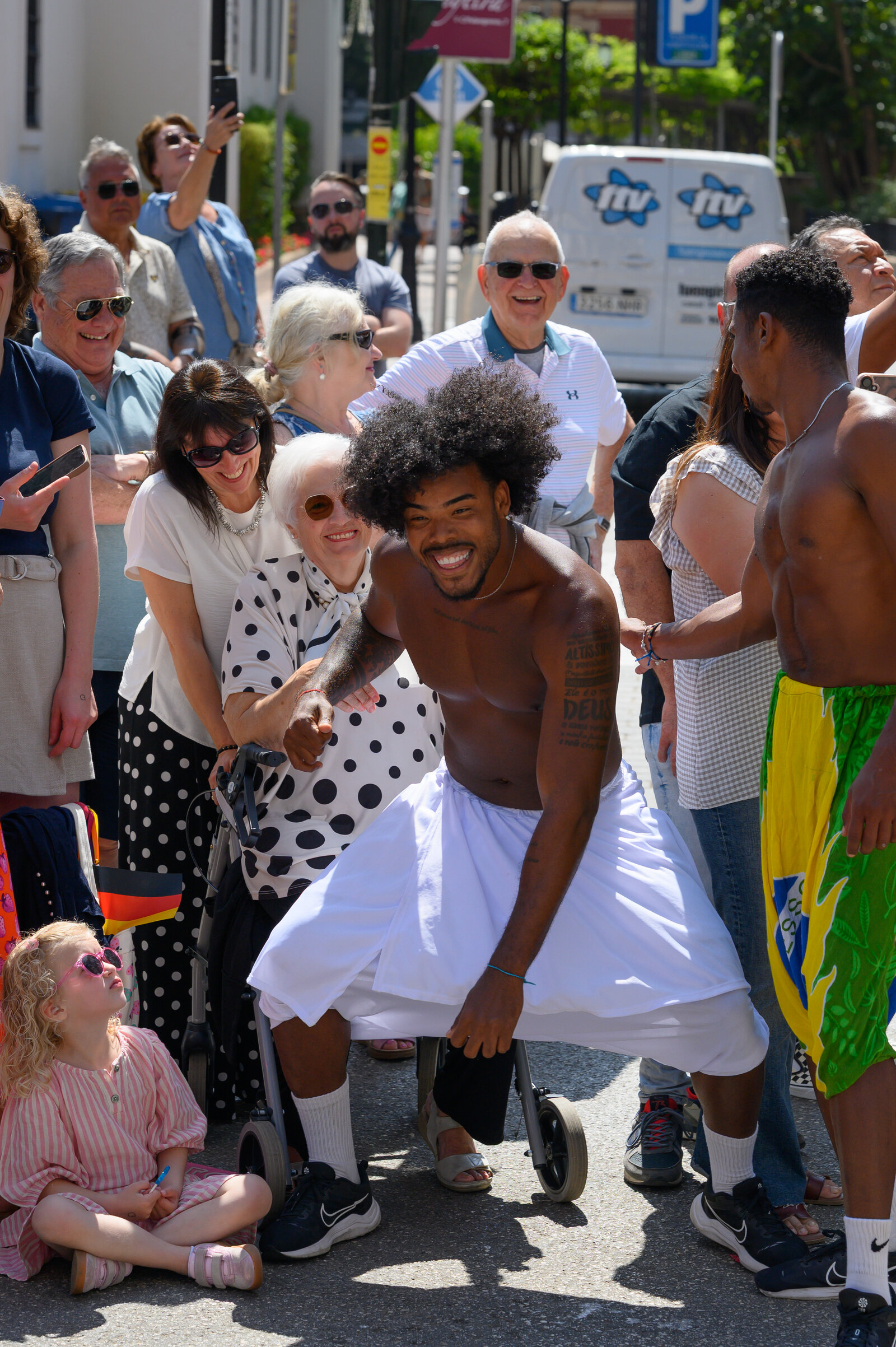 Brazil Nikon Z6 II, 85 mm f/5.6, 1/2000 s. Brazilians undoubtedly put on the best show.
 Brazil
Nikon Z6 II, 85 mm f/5.6, 1/2000 s. Brazilians undoubtedly put on the best show.
It is easy to fall into FOMO here – ending up with a mental gallery of great frames you never managed to shoot. You are afraid of missing something and start running in circles instead of taking pictures.
Pick one spot. See where the light falls, what you have in the background. Mount one lens and wait for the frame in the space you have chosen. Do not chase a better vantage point – you usually will not find one. Work like a wildlife photographer: settle where something interesting might happen and wait. Maybe it will, maybe it will not. There were also stops along the route where TV crews stood on raised platforms. Each nation performed its routine there.
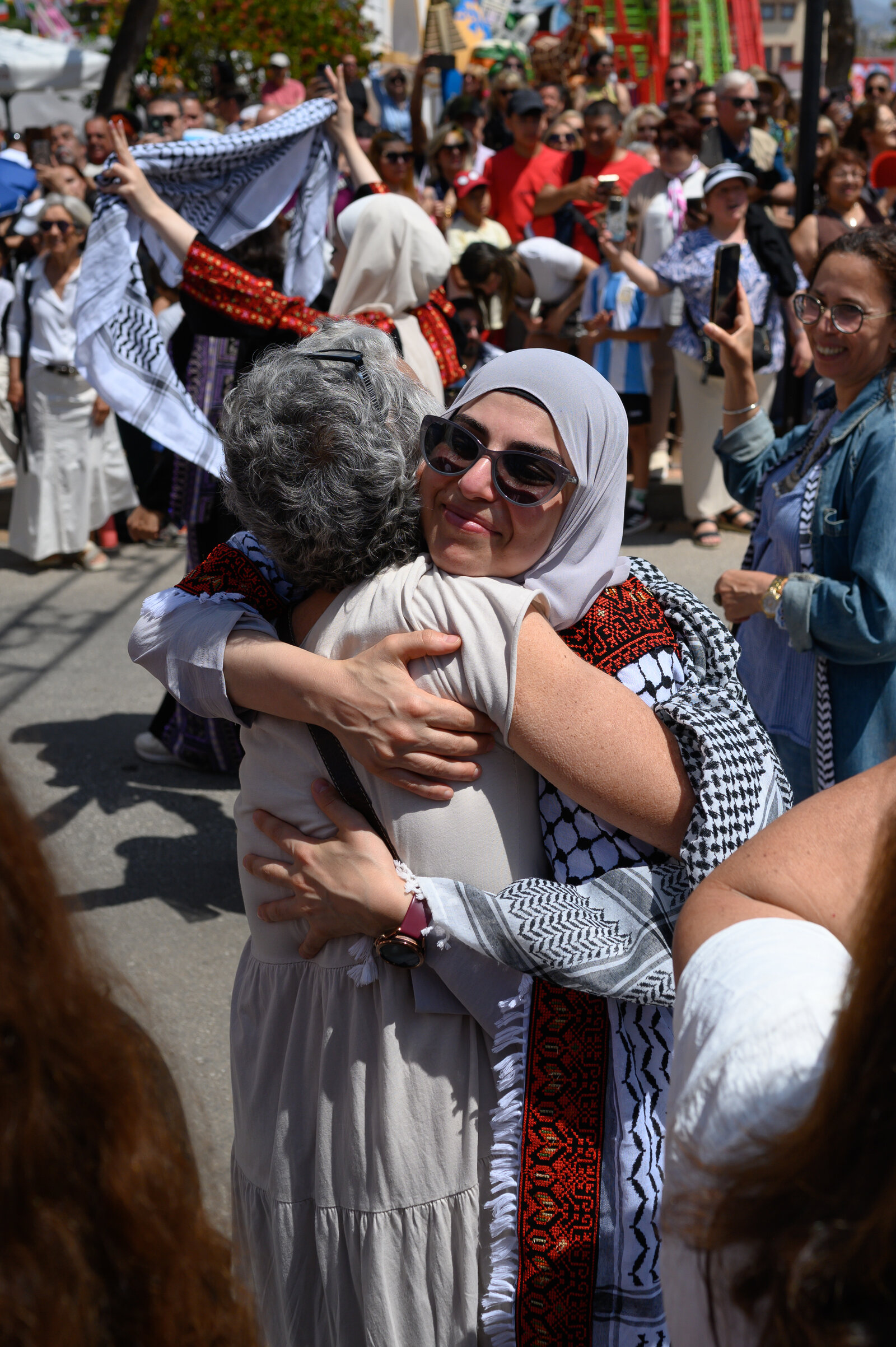 The Palestine delegation also took part in the parade Nikon Z6 II, 35 mm f/5.6, 1/3200 s. I made this and the following frames while moving within roughly a 10 m × 10 m area.
 The Palestine delegation also took part in the parade
Nikon Z6 II, 35 mm f/5.6, 1/3200 s. I made this and the following frames while moving within roughly a 10 m × 10 m area.
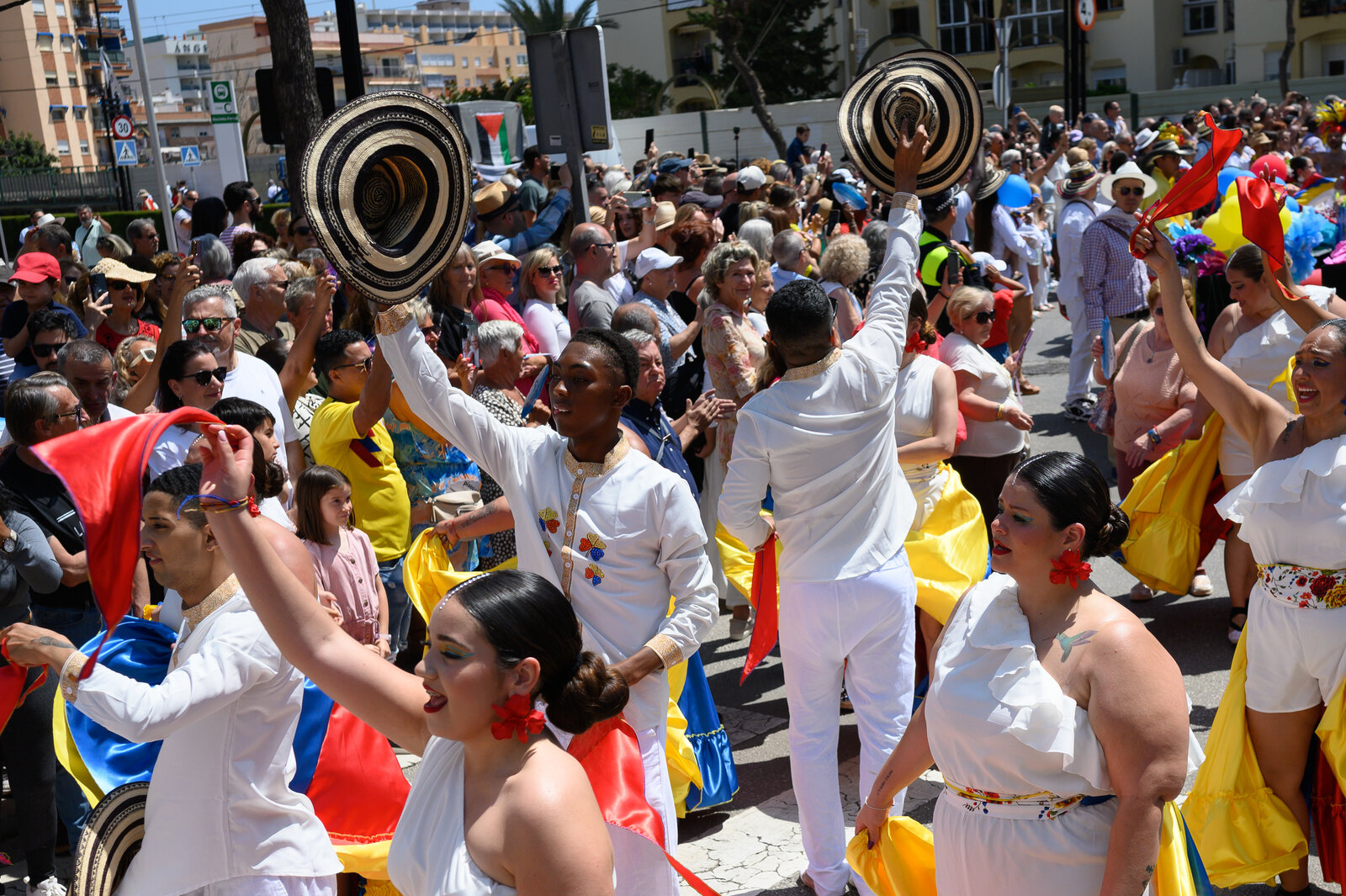 Colombia Nikon Z6 II, 35 mm f/5.6, 1/3200 s
 Colombia
Nikon Z6 II, 35 mm f/5.6, 1/3200 s
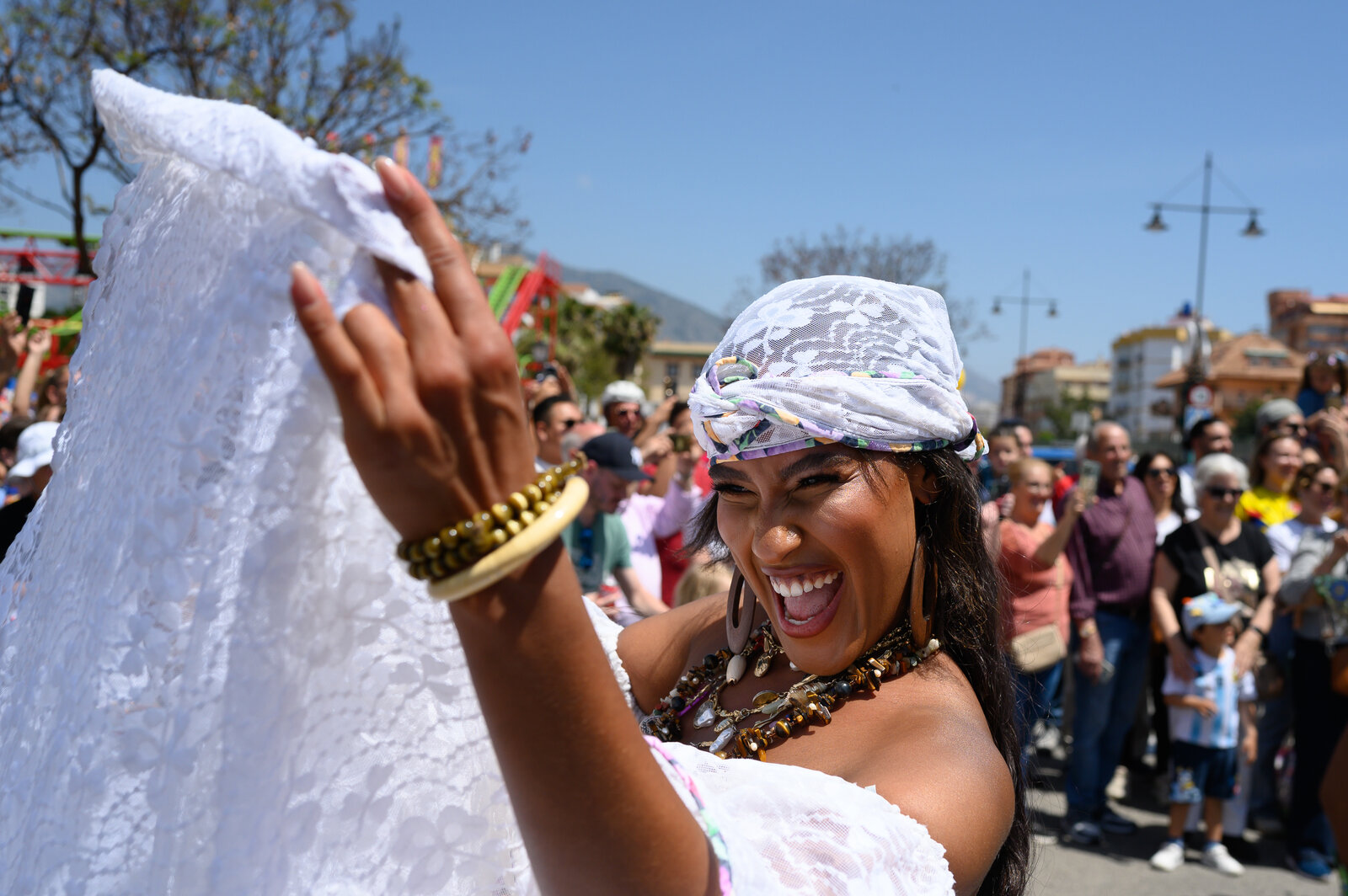 Colombia Nikon Z6 II, 35 mm f/5.6, 1/3200 s
 Colombia
Nikon Z6 II, 35 mm f/5.6, 1/3200 s
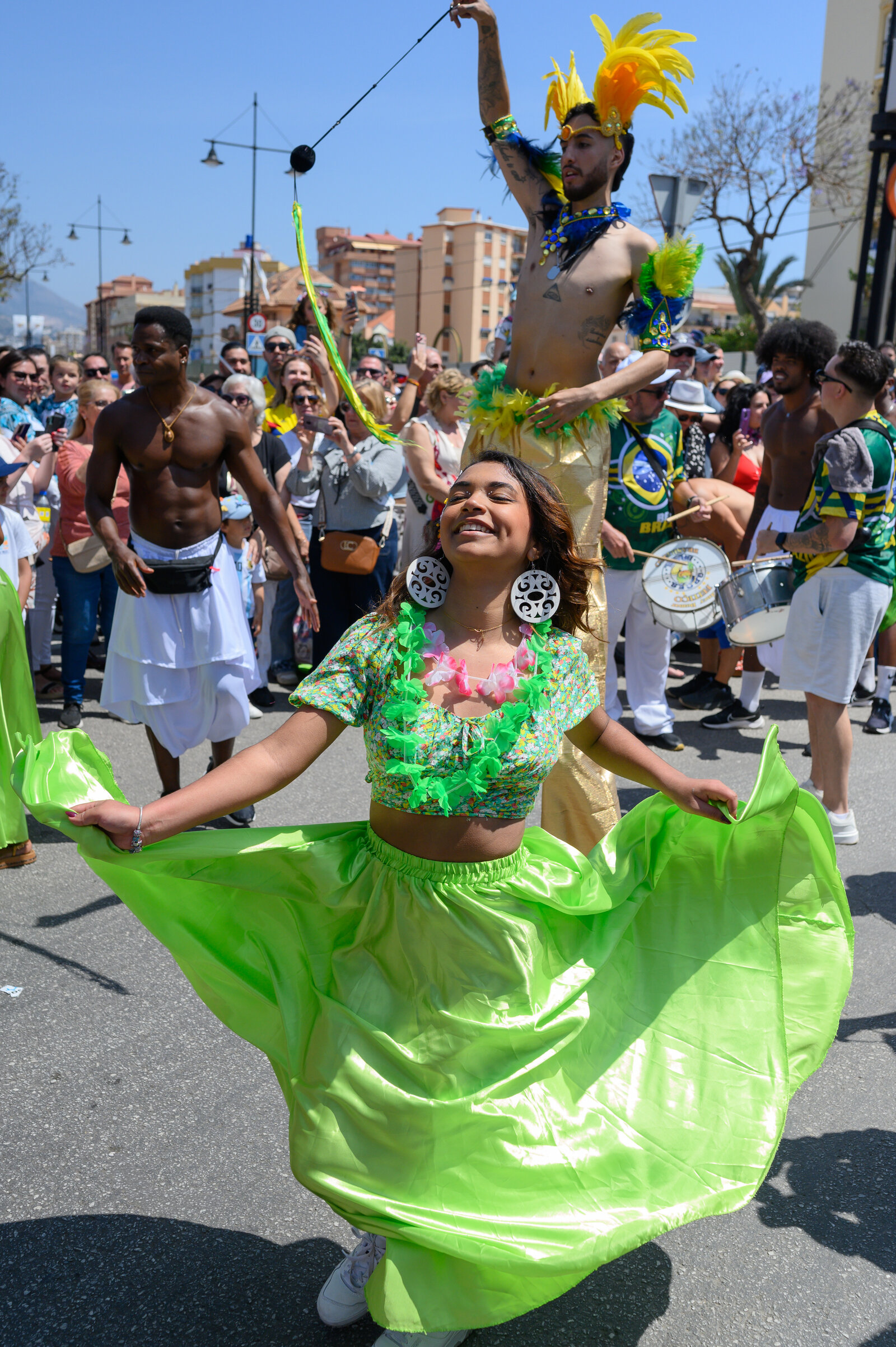 Brazil Nikon Z6 II, 35 mm f/5.6, 1/3200 s
 Brazil
Nikon Z6 II, 35 mm f/5.6, 1/3200 s
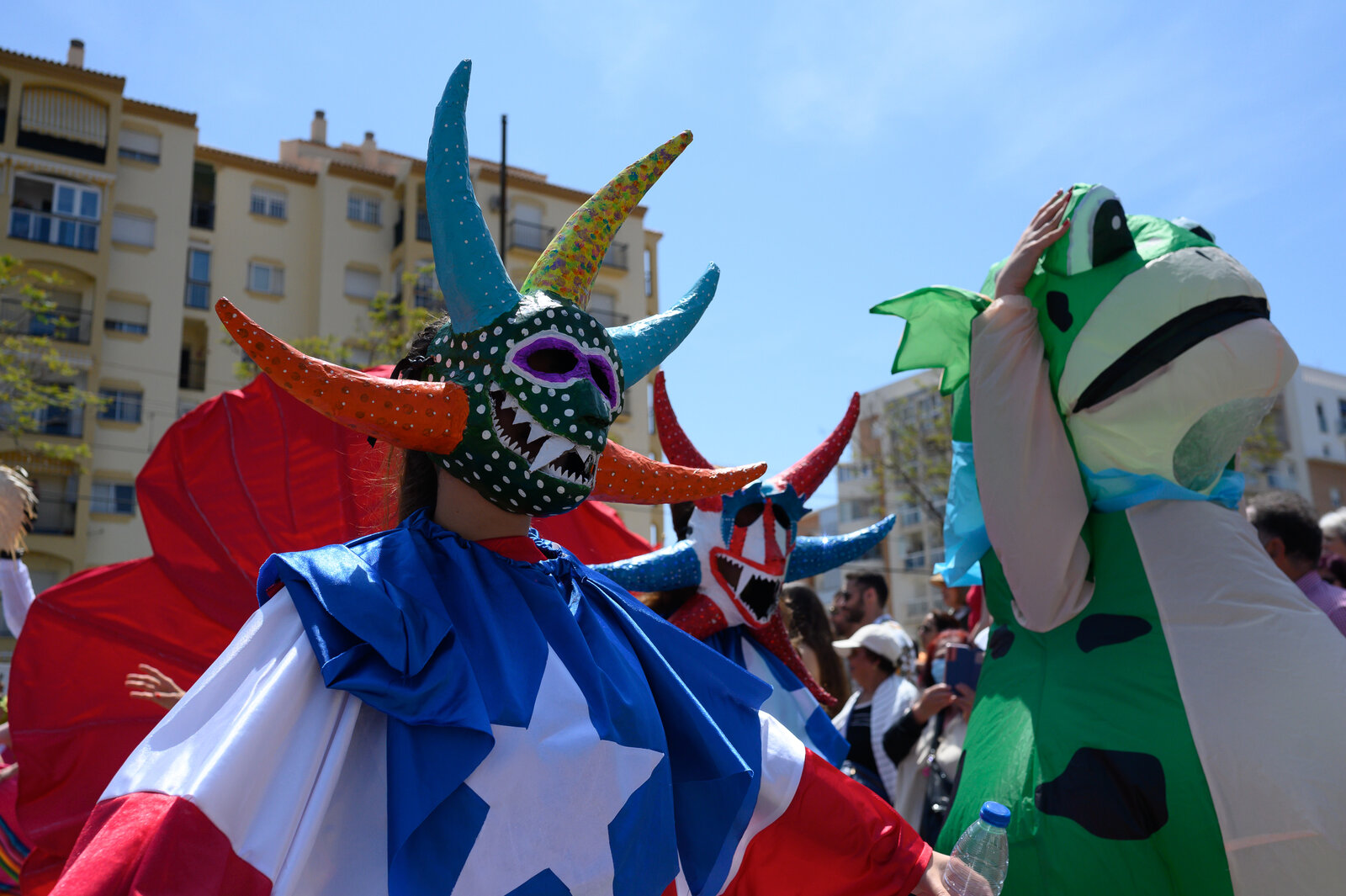 Puerto Rico Nikon Z6 II, 35 mm f/5.6, 1/5000 s
 Puerto Rico
Nikon Z6 II, 35 mm f/5.6, 1/5000 s
The grand finale
The route ends at Recinto Ferial. Here the river of participants and spectators spills into the individual pavilions. The march turns into a series of smaller and larger parties. The light changes, the dynamics change.
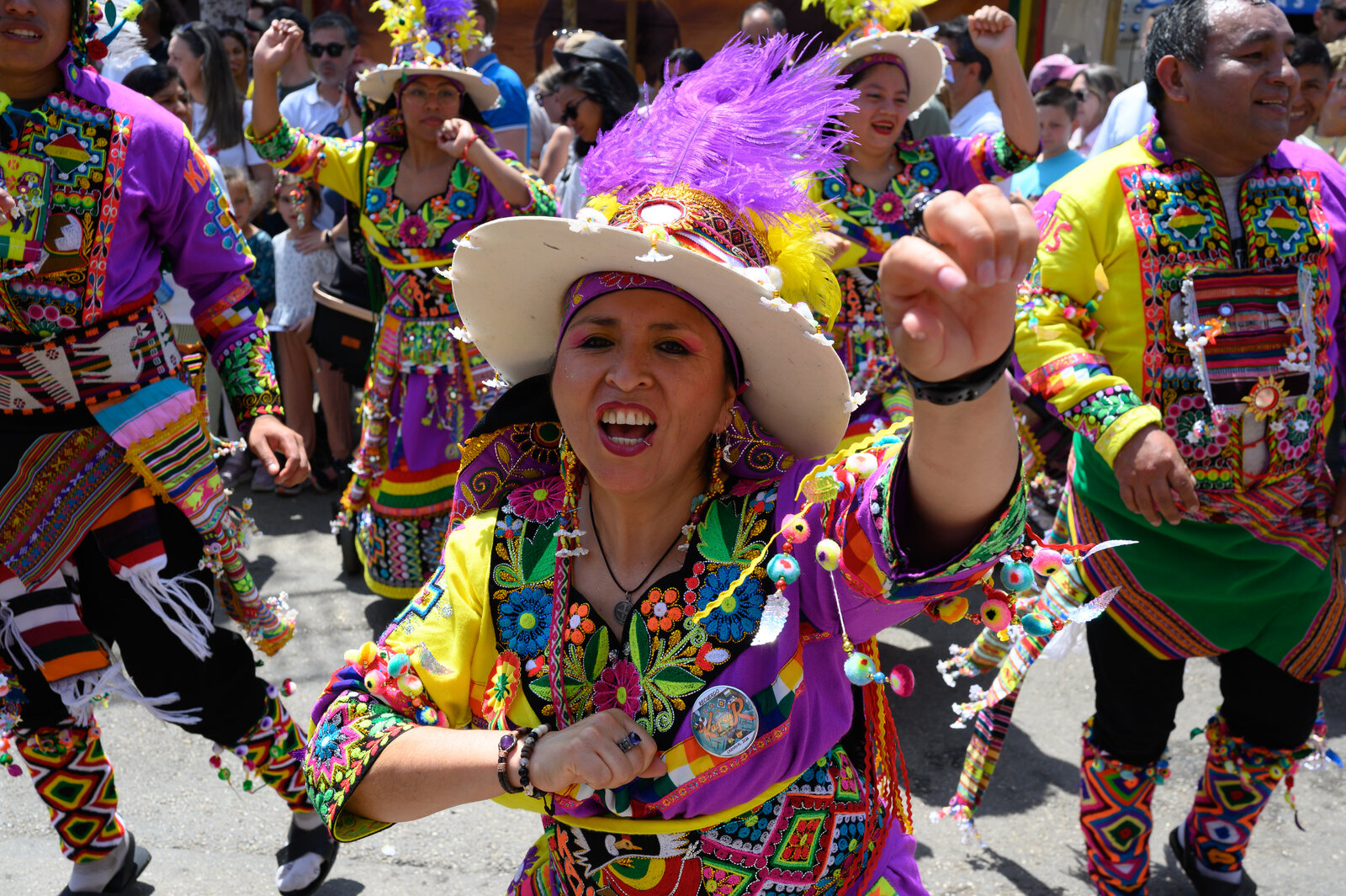 Some countries continued performing after the parade Nikon Z6 II, 35 mm f/8.0, 1/1600 s
 Some countries continued performing after the parade
Nikon Z6 II, 35 mm f/8.0, 1/1600 s
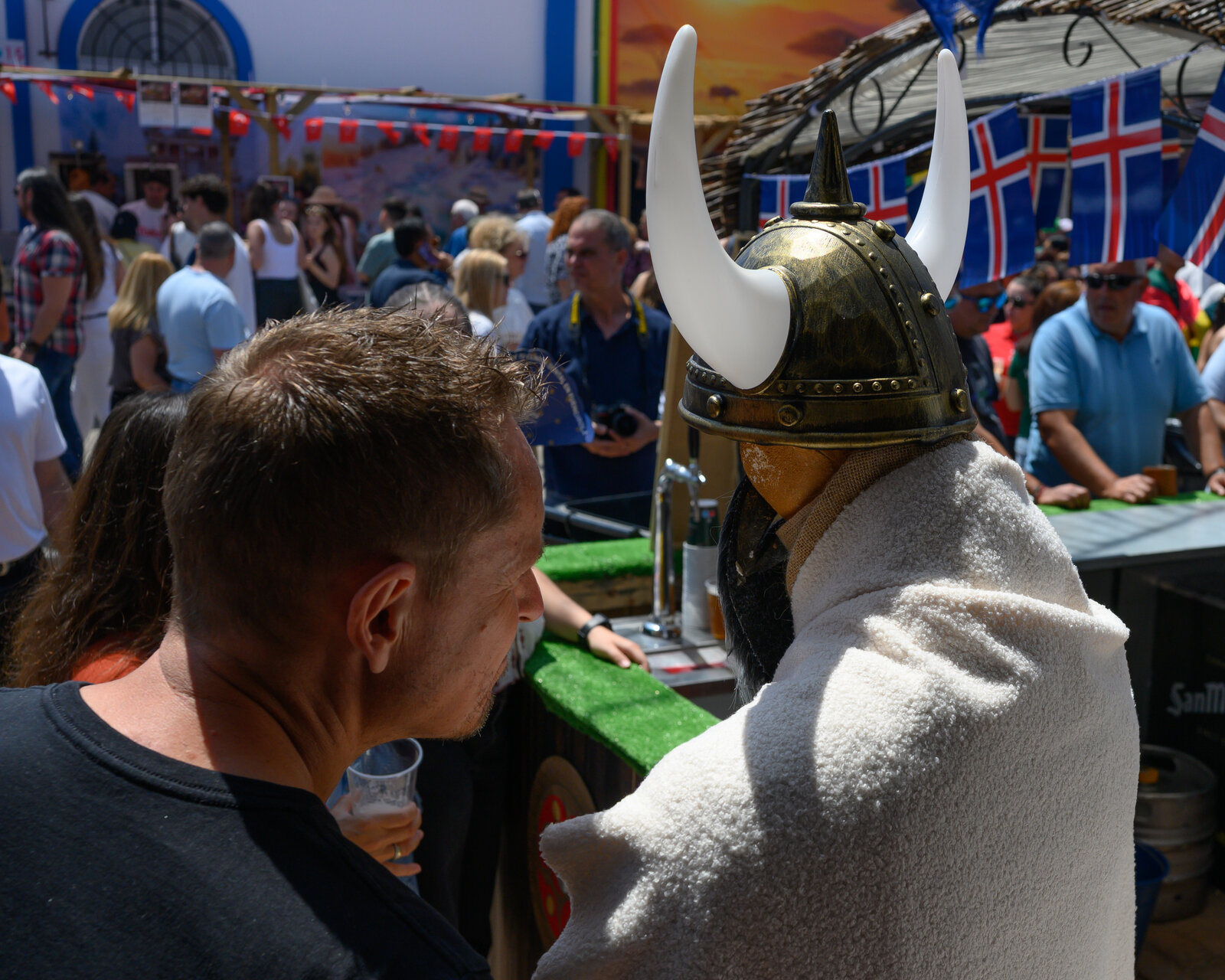 And conversations Nikon Z6 II, 35 mm f/7.1, 1/2000 s
 And conversations
Nikon Z6 II, 35 mm f/7.1, 1/2000 s
Gear after the battle – what worked and what did not
The hip belt and pouches were a bullseye. In a crowd there is simply no room or time to take off a backpack. I swapped between 35 and 85 mm almost on the run. The Think Tank belt is thick, stable, and very comfortable (it did not loosen, even with more gear hanging from it).
Bright primes in southern sun forced a specific way of working. No ND filters meant no chance for longer exposures and motion blur tricks. I could, however, freeze action at will with a wide aperture.
What was missing? I definitely felt the lack of a wide angle. When the action happens half a metre from you, 35 mm is often too tight. A telephoto, on the other hand, would have helped flatten perspective and show the true mass of people from a distance.
Still – no regrets. The setup was enough, and working within tight constraints felt refreshing.
In my final selection, the wider perspective won. About 70% of chosen frames come from the 35 mm lens (some lightly recropped in editing), and 30% from the 85 mm. The apertures that stand out in the stats are f/1.8, f/4, and f/5.6. Interestingly, half the images were shot at shutter speeds faster than 1/2000 s!
The Nikon Z6 II performed well, though in the most dynamic, chaotic moments I felt a flagship AF system would have forgiven me a little more. Someone with a typical reportage mindset would probably have squeezed even more out of this body.
Takeaways
- Primes work well – 35 mm and 85 mm pair nicely, especially since the resolution of these lenses allows comfortable cropping as if shooting at intermediate focal lengths.
- The hip belt and lens changers are excellent. I recently had a holster with body, lens, and tripod on the belt (about 3 kg total) and it handled it fine.
- ND filters – for stills, missing them limits longer exposures. For video it is a real problem.
- Wide angle and telephoto: I see the lack of that gear in the images I brought back, but on site I think it would have caused too much chaos. Unless I had a second body.
- Calm is strength – do not chase what you missed. Focus on anticipating what will happen next.
- Bring something to drink.
More about the event and official routes can be found on the Ayuntamiento de Fuengirola website and in the local press (Málaga Hoy).